Backyard Swales: What They Are, Why They Matter, and How to Landscape Around Them
If you live in a neighborhood built in the last few decades, chances are your backyard has a swale — a shallow, grassy channel designed to move stormwater safely across multiple properties. Homeowners often see them as an inconvenience, but swales are actually one of the most important drainage features on your lot.
When they’re maintained correctly, they prevent flooding, protect foundations, and keep water away from your home and your neighbor’s.
This guide breaks down what a swale does, how to care for it, and five smart ways to landscape around one without disrupting drainage.

What Exactly Is a Swale?
A swale is a shallow, graded depression that collects and directs stormwater. Unlike a ditch, a swale is designed to be:
Wide and gently sloped
Stable and easy to mow
Able to move water slowly and safely
Part of a neighborhood-wide drainage system
Most swales run lot‑to‑lot, meaning your swale connects to your neighbors’ and eventually leads to a storm drain or retention pond. That’s why maintaining it isn’t just about your yard — it’s about the entire drainage network.
Why Swales Matter
Swales are engineered to:
Keep water away from your foundation
Prevent standing water and soggy lawns
Reduce erosion
Move water without the need for expensive underground pipes
Protect neighboring properties from runoff
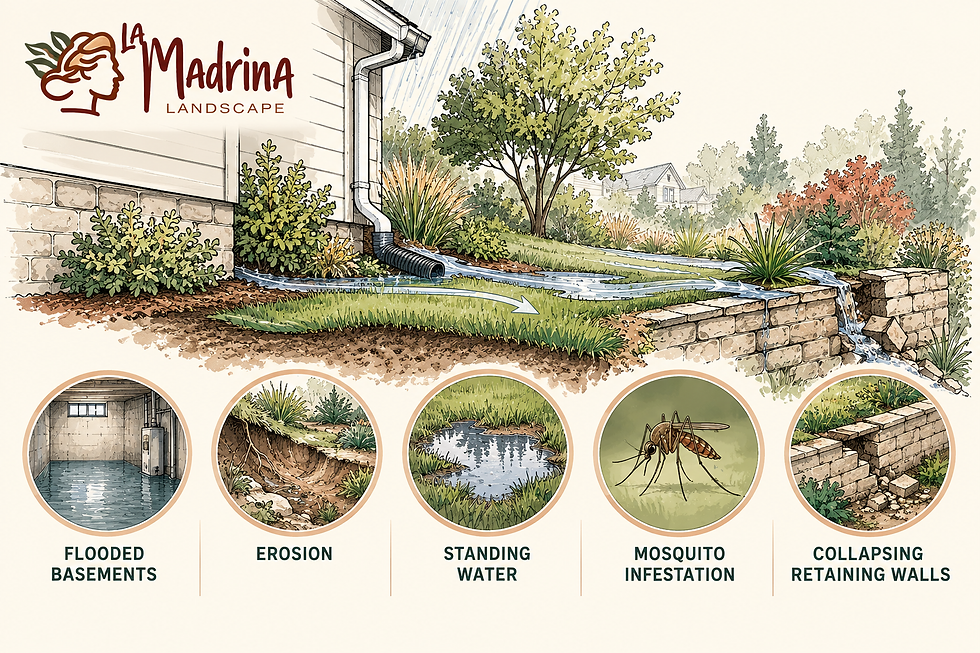
When a swale is altered, blocked, or filled in, the result is almost always the same: flooding, erosion, and neighbor disputes.

How to Maintain a Backyard Swale
Swales are simple, but they do require basic care. Here’s what homeowners should do:
Keep the slope intact
The grade is everything. Even small changes — adding soil, mulch, or decorative rock — can disrupt flow. If water stops moving, the swale needs professional regrading.
Mow regularly (but not too short)
Grass should be kept healthy and dense. Cutting it too short weakens the root system and increases erosion.
Remove debris
Branches, leaves, toys, and lawn waste can block water and cause backups. Keep the channel clear.
Avoid planting shrubs or trees in the swale
Roots can obstruct flow or create dams. Save woody plants for the higher, drier edges.
Never fill in or flatten the swale
Even small “fixes” can cause major drainage failures. If you want to change the look, there are safe ways to do it — but the shape must remain functional.
5 Landscaping Options That Work With (Not Against) Your Swale
Homeowners often want their swale to look more intentional — not like a random dip in the yard. Here are five attractive, drainage‑safe ways to landscape around it.
1. A Native Grassy Swale (Low Maintenance + Ecological)
Swap standard turf for native sedges, switchgrass, or prairie dropseed. These plants:
• Handle wet‑to‑dry cycles
• Have deep roots that stabilize soil
• Look beautiful in all seasons
• Require less mowing
This option keeps the swale fully functional while adding texture and movement.

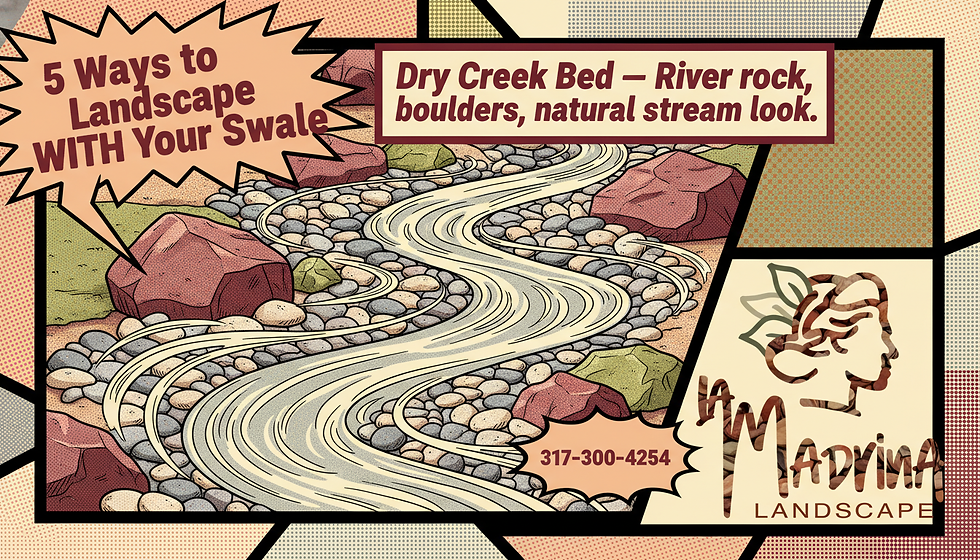
2. A Dry Creek Bed (Great for Curb Appeal)
A dry creek bed uses river rock, boulders, and strategic plantings to mimic a natural stream. It’s perfect for homeowners who want a polished, intentional look.
Benefits:
• Directs water effectively
• Reduces erosion
• Adds a high‑end design element
Important: The underlying grade must remain intact — the rocks are decorative, not structural.
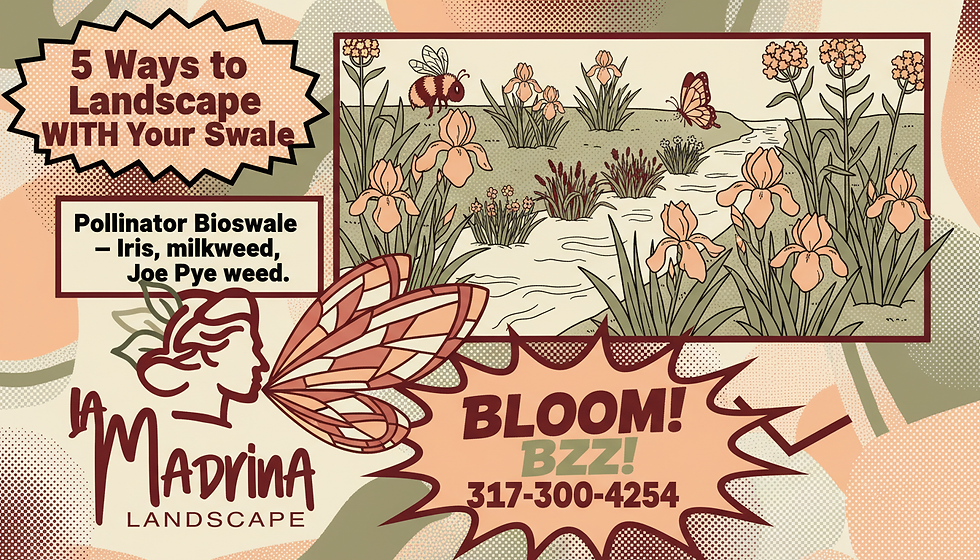
3. A Pollinator-Friendly Bioswale
For homeowners who love plants, a bioswale is a beautiful upgrade. It uses deep‑rooted natives like:
• Blue flag iris
• Joe Pye weed
• Swamp milkweed
• Little bluestem
• Black‑eyed Susan
These plants slow water, filter pollutants, and support butterflies and bees.
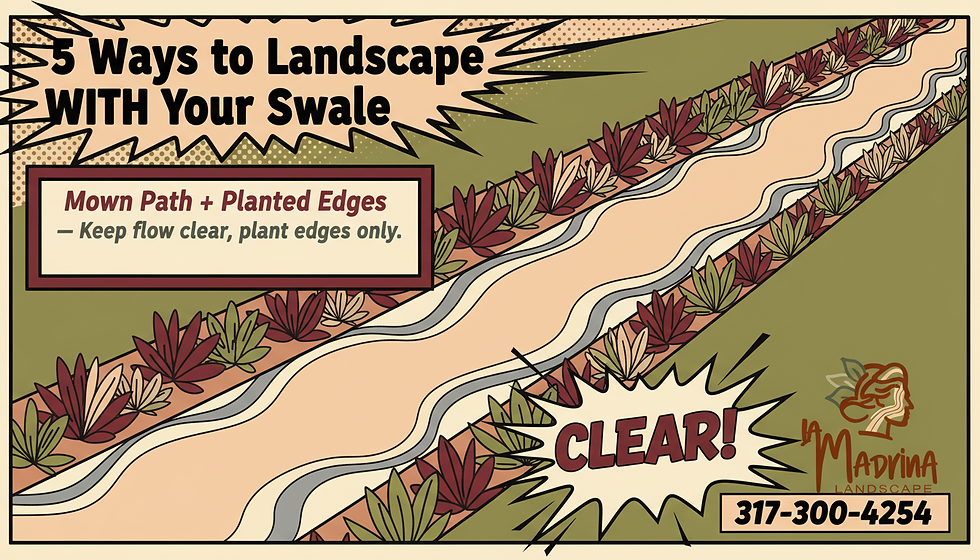
4. A Mown Path With Planted Edges
If the swale cuts through a usable part of the yard, create a mown walking path down the center and plant the higher edges with:
• Daylilies
• Coneflowers
• Ornamental grasses
• Low shrubs (placed outside the flow line)
This keeps the swale accessible while making it feel like part of the landscape design.

5. Decorative Bridging or Stepping Pads
For swales that cross between patios, sheds, or play areas, you can add:
• Stepping stones
• Wood or Gravel “bridges”
These features allow foot traffic without compacting soil or blocking water.
When to Call a Professional
You should bring in a drainage or landscape professional if:
• Water is pooling for more than 24 hours
• The swale is eroding or washing out
• Your neighbor’s yard is flooding
• You want to redesign the area without risking drainage failure
• You suspect the grade has been altered over time or by a previous homeowner.
A properly functioning swale protects your home — and your neighbors’ — so it’s worth getting it right.
Final Thoughts
Backyard swales aren’t a flaw in your yard — they’re a built‑in drainage system that keeps your property safe. With the right maintenance and thoughtful landscaping, a swale can be both functional and beautiful.


Comments