Designing for Accessibility: Creating Landscapes Everyone Can Enjoy
Beautiful landscapes should invite people in—not create barriers.

For many homeowners, accessibility isn't something they think about until life changes. An injury, aging parents, young children, or a mobility limitation can quickly turn steps, uneven paths, and narrow walkways into daily obstacles.
The best accessible landscapes don't look institutional. They feel effortless. They blend thoughtful design with natural beauty so every person can experience the outdoors with comfort, dignity, and independence.
Accessible Landscape Starts Before Construction

An accessible landscape begins with planning.
Questions worth considering include:
Can someone using a wheelchair or walker move independently?
Are gathering spaces easy to reach?
Is there a comfortable place to stop and rest?
Can the garden be enjoyed from multiple viewpoints?
Are maintenance requirements manageable as homeowners age?
When accessibility is considered from the beginning, it becomes part of the design instead of an afterthought.
Smooth, Comfortable Pathways
Pathways are the backbone of an accessible landscape.
Wide walkways with gentle slopes allow everyone to move comfortably while creating a more elegant flow throughout the property.
Good pathway design includes:
Stable, slip-resistant surfaces
Gentle grades instead of stairs whenever possible
Adequate width for wheelchairs and walkers
Minimal cross slopes
Clear transitions between materials
Areas to pause and enjoy the garden

Design Element | Accessible Requirement / Recommendation |
Pathway Width | Minimum 36 to 48 inches (for wheelchairs/walkers to pass comfortably) |
Surface Material | Firm, stable, and slip-resistant (e.g., tightly jointed pavers, poured concrete) |
Max Slope/Grade | Ideal grade is 1:20 (5% slope); steeper than 1:12 requires a formal ramp |
These features don't just benefit those with mobility challenges—they make landscapes more enjoyable for parents pushing strollers, guests carrying food to the patio, and anyone wanting an easier walk through the garden.
Gardens That Can Be Experienced Up Close
Accessibility is about more than movement.
It's about interaction.
Raised planting beds allow gardeners to tend flowers and vegetables without kneeling. Fragrant herbs, ornamental grasses, and pollinator plants provide texture, color, and movement that can be appreciated from a seated position.
Water features create gentle sound.
Native plants attract birds and butterflies.
Seasonal blooms provide year-round interest.
When every sense is engaged, the landscape becomes more immersive for everyone.
Comfortable Outdoor Living
Outdoor spaces should encourage people to stay.
Comfortable seating with armrests, shaded gathering areas, smooth transitions between patios and pathways, and lighting that improves evening visibility all contribute to a landscape that's welcoming regardless of age or ability.
Simple details make a remarkable difference:
Shade trees and pergolas
Comfortable seating throughout the garden
Low-glare landscape lighting
Easy-to-reach water features
Furniture with generous circulation space
These aren't just accessibility features. They're simply good design.
A Project Close to Our Hearts
One of our favorite projects was the restoration of Tony's Trinity Courtyard.
The goal wasn't simply to renovate a landscape—it was to restore independence.


After years of relying on a wheelchair, Tony wanted to experience his church garden again without obstacles standing in the way. Every decision was made with purpose: generous continuous pathways, gentle grades, raised planting beds, accessible gathering spaces, and carefully planned destinations that encouraged reflection and fellowship. A custom planting station was the final touch, designed, not adapted, specifially for Tony.
The project also honored the original vision of the garden while creating a space that welcomed every visitor, regardless of mobility.
Watching someone reconnect with a place that had once become inaccessible is a reminder that great landscape design isn't measured only by appearance. It's measured by what it allows people to do.
Designing for Every Stage of Life
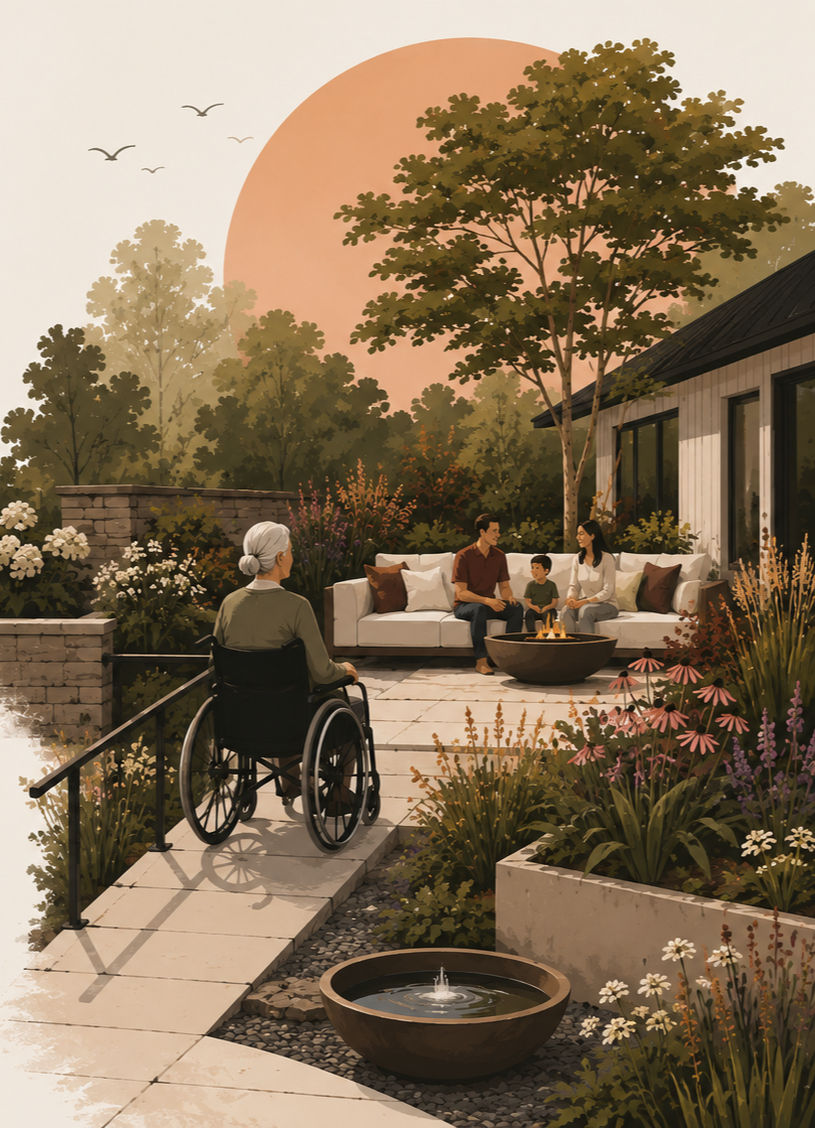
An accessible landscape is an investment in the future.
Universal design allows homeowners to remain in the homes they love longer while making outdoor spaces easier for family members, guests, and future generations. Beautiful landscapes should grow with the people who enjoy them.
Accessibility isn't a compromise. It's thoughtful design that works better for everyone.
Ready to Create an Accessible Landscape?
Whether you're planning for aging in place, accommodating a family member with mobility challenges, or simply designing an accessible landscape that's easier to enjoy every day, thoughtful planning makes all the difference.
At La Madrina Landscape, we believe exceptional landscapes combine beauty, craftsmanship, and purpose. We'd be honored to help design an outdoor space that's welcoming, functional, and built for every season of life.
[Click here to schedule your complimentary landscape consultation today] and discover what's possible...


Comments